Craft with a specific purpose
Our readers include filmmakers, production designers, students and model enthusiasts. Some are planning their first architectural fragment. Others are deciding which parts of a larger environment should exist physically. Both benefit from a clear question: what must this construction do in the shot?
We organise the subject around four related but distinct responsibilities: scale and perspective, scenic surfaces, camera and lighting access, and workshop assembly. The pages offer a way to make decisions and run useful tests, rather than a universal recipe for every model.
References, not borrowed authority
Films and practitioners appear as study references, not endorsements. We are not affiliated with the productions, studios, publishers or individuals discussed. A film’s final image may combine miniatures, full-size scenery, optical work and digital effects; it should not be treated as evidence of one technique without a reliable production account.
Our reference shelf includes Raymond Fielding’s The Technique of Special Effects Cinematography, Mark Cotta Vaz and Craig Barron’s The Invisible Art, Lorne Peterson’s Sculpting a Galaxy and Kris Malkiewicz’s Film Lighting. For further independent research, the British Film Institute, Wētā Workshop and Industrial Light & Magic provide useful starting points.
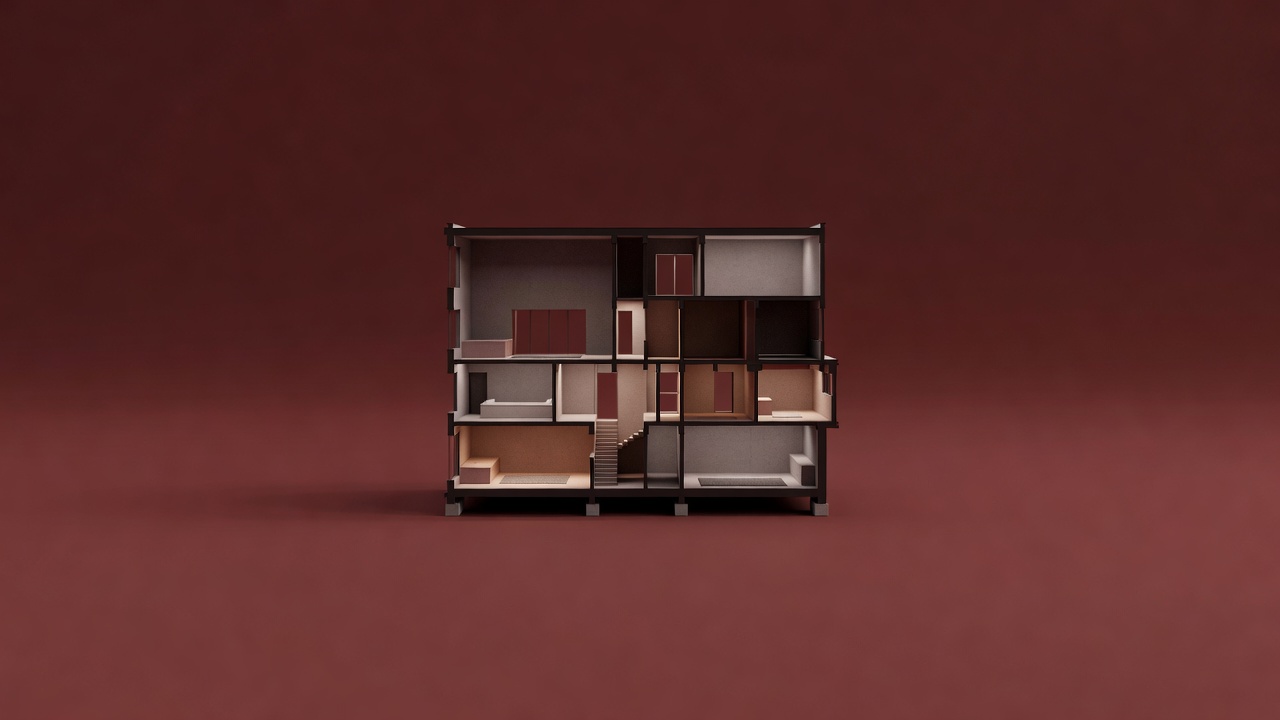
How to read the imagery
Our render plates are conceptual illustrations. They show ideas such as removable sections, material contrast and selective depth. They are not production evidence, measured plans, structural specifications or proof that a material will behave as shown. Captions make this distinction explicit.
Photographs used for general workshop context should likewise be read as context unless a caption identifies a documented production and its source. We do not attach invented quotations to filmmakers or present an illustrative render as a historic artefact.
Safety and useful limits
Modelmaking can involve sharp tools, dust, coatings, electrical systems and heavy components. Our articles are general educational information, not a substitute for training, product instructions or a project-specific risk assessment. Hazardous effects, lifting and electrical work require appropriately competent people.
If you spot an error, a misleading attribution or a useful missing distinction, please prepare a correction note. Include the page, the passage and a source we can evaluate. Specific observations make a practical journal more useful.